
Photographs

_________________________________________________
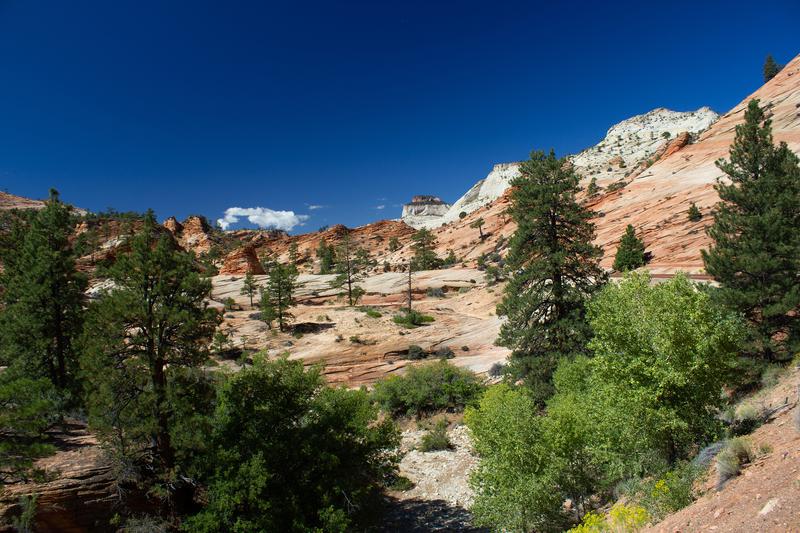
Zion National Park in southwestern Utah is one of the most visited
national parks in the country, along with Grand Canyon NP and Yosemite NP. When I went there in September, 2014 the area near
the entrance and visitor center was so jampacked with cars and
people that I decided to leave and go around to the east entrance
of the park to see what that offered. So I missed the canyon with
its monumental 2000-2600 foot walls, but was treated to a very
different experience on the eastern plateau above the canyon. The plateau was full of monumental stone formations on a smaller but
still very impressive scale, with great scenery of its own. One of
the more intriguing views was not of monumental stone slabs but
this view of a slickrock expanse with ponderosas growing out of
the rock, leading toward some cliffs in the distance. Slickrock,
which is not slick, is like the interstate of the wilderness. I love to
hike on it. It would have been nice to explore this scene, but I
didn't know if going offtrail was prohibited in Zion and I was eager
to get through the half-mile tunnel and down the interminable switchbacks to see if there was camping at the east entrance
to Zion Canyon. The canyon leading down to it was awesome in
itself, but I didn't see a campground. It was definitely worth the
drive though. It's a majestic place from the east side as well.
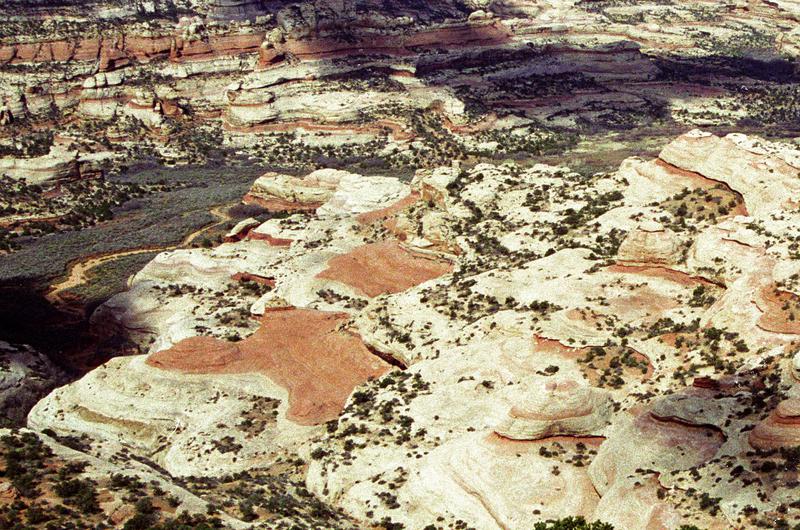
A shot of the eroded layers of sandstone forming the walls of Salt
Creek Canyon in the Needles District of Canyonlands National
Park, taken from the top of the mesa above. It's delightful to hike
these stairstep layers of rock, but I found when I tried to hike down
to the canyon bottom over them that the last layer had a sheer drop
of at least 40 feet, and I had to make a long detour back to the main
trail down into the canyon. There was a free-flowing spring with a
good-sized pool and a wonderful campsite under some junipers when
I got to the bottom of the canyon. It requires about a five-mile back-
pack to get down, but what a magical place to visit! It's like some god
poured a giant cauldron of multicolored taffy here that hardened eons
ago. There are at least 5 arches in this upper section of the 28-mile
hikeable trail in the canyon, one of which is perfectly round and thin
like a ring called Wedding Ring arch. This photo is cropped from a
much wider view of the canyon, so it's not as sharp as I'd like, but it
shows the stairstep layers well.
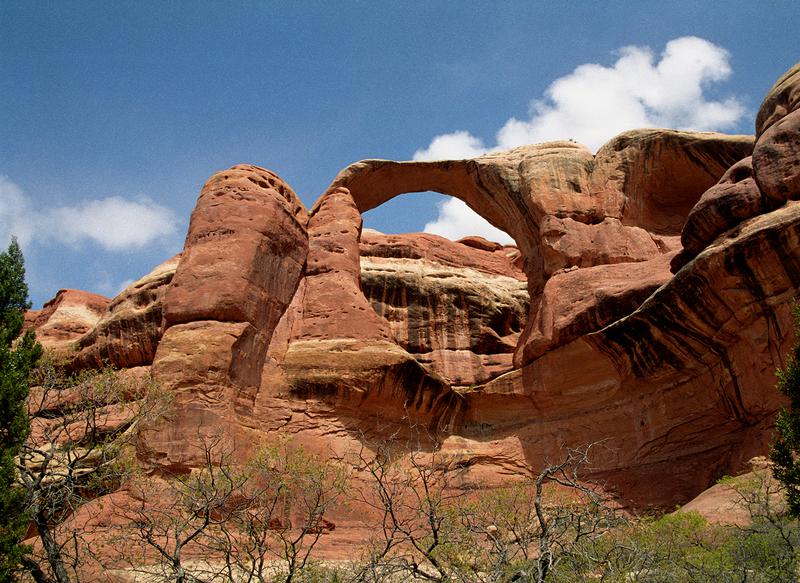
This is a photograph of Wedding Ring Arch in the Needles District
of Canyonlands National Park's Salt Creek Canyon. One of the most
remarkable arches on thew Colorado Plateau, you can see how it
got its name. It's on the right near the mouth of Big Pocket, while the
Trails Illustrated map shows it farther south on one of the stairstep
benches forming the sides of the canyon shown in the photo below -
unless Trails Illustrated has corrected it. My map is at least 15 years
old. Trails Illustrated marks it at a spot where there is a very small
arch that at 5' 6" I could just barely walk under without bumping my
head. It's my second favorite Colorado Plateau arch behind Saddle
Arch in Capitol Reef NP's Muley Twist Canyon. If you're a backpacker,
Salt Creek Canyon is a wonderful place to visit, best approached from
the mesa above its south end, unless you want to do a 5-7 day
backpack.

I took this photograph on Trail 505 in the Elena Gallegos Open Space Area in August of 2025 when the setting sun shining
through this juniper caught my eye. The juniper filtered the sun enough to not overpower the golden glow on the grass that you often see on grasses or fields of grain near sunset or the clouds
above.
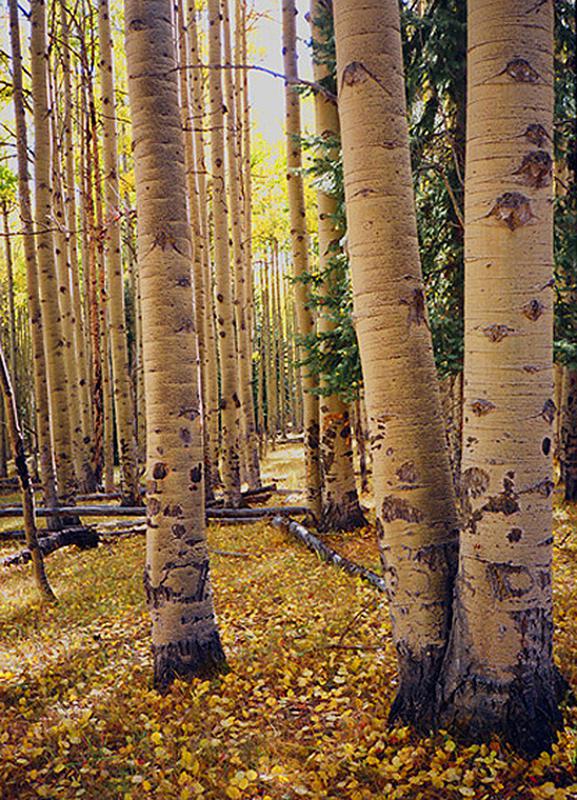
I photographed this grove of aspens in the Pecos Wilderness along Jack's
Creek Trail when I first started hiking in the Pecos in the early 2000s. I
always liked this photo because it creates the illusion that you're peering
down a corridor between the trees that leads somewhere after it veers to the
right and creates an enticing sense of mystery, making you wonder where it
leads even though it's probably just a random stand of trees.
